35,898 Homes for Sale Give Houston Renters More Options
A fresh listing report widens the ownership alternative, but mortgage costs and property-level renewal evidence determine the apartment impact.

Key takeaways
- 35,898 active Houston listings in September, up 5.3% year over year.
- 9,000 new Houston listings, up 4.3%, against a 0.7% national decline.
- $353,995 median Houston asking price, down 1.7% annually.
- 7.28% national 30-year fixed mortgage benchmark as of October 1.
Houston apartment owners have another competitor to watch: the for-sale housing market. In an October 2 report, Realtor.com counted 35,898 active listings in its Houston series for September, up 5.3% from a year earlier. More available homes give some renters a wider set of alternatives when their leases expire.
That is a renewal risk, not evidence of a renter exodus. A listing becomes meaningful competition only when a household can afford the down payment, qualify for financing and accept the continuing costs of ownership. The useful question is where those conditions overlap with an apartment property’s residents.
5.3% more listings widen the choice set
Realtor.com reported 9,000 new Houston listings in September, up 4.3% year over year, while new listings nationally fell 0.7%. The active inventory increase was close to the national increase of 5.4%. Houston’s result therefore points to more choice without establishing an unusually large local inventory shock.
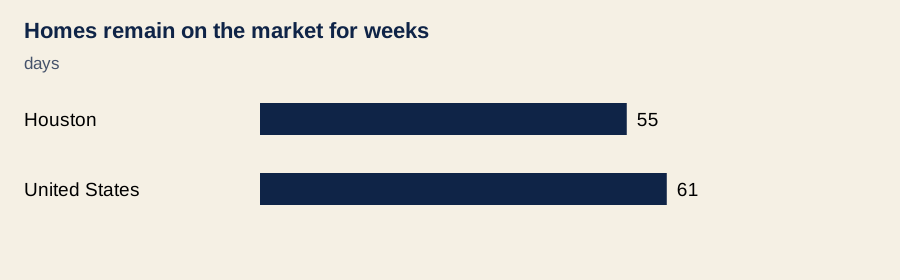
Source: Realtor.com September 2026 Houston report, October 2. Median days on market; Houston and U.S. listing series. Zero baseline.
Inventory is a stock of available listings, while new listings describe homes entering the market. Neither measures how many apartment residents purchased a home. A household might browse for months, renew for another year or decide that keeping cash available matters more than owning immediately.
The report also put Houston’s median time on market at 55 days, compared with 61 nationally. Price reductions appeared on 20.2% of Houston listings, versus 20.8% across the country. Those figures suggest room for negotiation on some homes, but they do not establish that every seller is distressed or that every buyer can negotiate the same terms.
$353,995 is an asking price, not an ownership budget
The Houston median listing price was $353,995, down 1.7% annually; the national median was $419,250, down 1.4%. A lower asking price can bring a prospective purchase closer to reach. It cannot by itself tell an apartment owner which residents will leave or how much their housing costs would change.
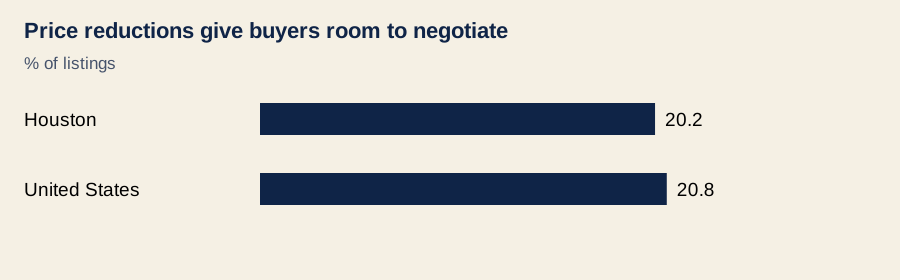
Source: Realtor.com September 2026 Houston report, October 2. Listings with price reductions; not the size of each reduction. Zero baseline.
For another view, HAR’s August report recorded a $330,000 median price for closed single-family sales. That is a different month and a different transaction measure from Realtor.com’s September listing median. Treating the gap as a discount available to today’s renter would mix populations and confuse asking prices with completed deals.
Financing is the other large constraint. Freddie Mac’s October 1 survey put the national 30-year fixed mortgage rate at 7.28%. That benchmark describes home mortgage lending, not a Houston apartment acquisition loan or an offer to a specific household. Even when sellers trim prices, borrowing costs can keep an ownership decision out of reach.
The full ownership budget also includes taxes, insurance, maintenance and any association charges. Flood coverage deserves separate attention: the Texas Department of Insurance explains that most homeowners policies exclude flood damage. Comparing apartment rent with mortgage principal and interest alone leaves material expenses outside the comparison.

What it means for owners and investors
The first exposure is likely to appear in renewal conversations. Residents with savings, stable income and plans to stay in the area can compare a purchase with another lease term. Owners should record whether homebuying actually drives departures, rather than assuming every nonrenewal reflects a competing apartment’s concession.
Competition already matters within multifamily. Cushman & Wakefield reported 11.1% stabilized vacancy in Houston multifamily for the second quarter. That earlier-quarter measure is context, not a September vacancy reading, and it does not identify homebuying as the cause. It does show why adding another possible source of turnover warrants attention.
A vacant apartment creates more than lost rent. Make-ready work, marketing and any leasing incentive can reduce the income retained from a replacement resident, even if the new headline rent matches the prior lease. A renewal offer should be compared with that full turnover cost, using the property’s own history.
This is where net operating income becomes the decision tool. Protecting an occupied unit can be economically sensible when a modest renewal adjustment costs less than downtime and reletting. Broad concessions offered without checking resident behavior can also surrender income to households that were already likely to stay.
Debt service does not decline automatically when occupancy slips. An owner with limited cash cushion should stress operating income for slower renewals and longer vacancy, then compare the result with actual loan obligations. Property-level loan terms matter more for that exercise than a national home mortgage survey.
Acquisition basis should reflect the cash flow a buyer can defend through that competition. Underwriting an immediate end to concessions or effortless rent increases turns uncertain resident behavior into a purchase-price assumption. A lower entry price can provide flexibility, but it cannot repair an operating plan built around unverified demand.
At exit, weaker sustainable income can reduce value even if the capitalization rate stays unchanged. A higher exit cap rate would compound the pressure; more homes for sale alone does not establish that cap rates will rise. The disciplined approach is to test those risks separately and avoid presenting a listing trend as a valuation forecast.
What to watch next
The next housing releases should be read alongside renewal notices and documented move-out reasons. Watch whether available inventory stays elevated, asking-price reductions become completed-sale changes and financing becomes easier to obtain. Those developments would make the ownership alternative more actionable than a larger browsing selection alone.
New construction is another channel. NAHB’s September survey tracks builders’ price cuts and sales incentives nationally, but it does not establish the terms offered near a particular Houston apartment. Local builder offers deserve review where residents might switch from renting to buying.
The test is straightforward: do more residents actually leave to buy, and does replacement leasing recover the lost income? Until property records and subsequent market data answer that, increased for-sale choice belongs in the sensitivity analysis. It is a reason to sharpen renewal decisions, not to declare Houston apartment demand broken.