2.3% Rent Decline: Houston’s Flat September Still Tests Income
October’s rent report signals steadier pricing, but persistent concessions keep apartment cash flow and refinancing under pressure.

Key takeaways
- 0.0% September rent growth in Houston proper; annual rents remain down 2.3%.
- $1,335 is Apartment List’s estimated Houston metro median rent.
- 60.3% of Houston metro zero-to-two-bedroom listings offered concessions in August.
- 13,274 units remained under construction in Colliers’ Q2 Houston dataset.
Houston apartment owners have a little breathing room, but October’s rent data does not yet justify a victory lap. Flat pricing can slow the damage from a weak leasing market without restoring the income that disappeared earlier in the cycle. For investors, that distinction should drive the budget, the loan request and the price offered for a property.
2.3% below last year, despite a flat September
Apartment List’s October Houston report puts September rent growth at 0.0%, with city rents down 2.3% year over year. Its estimated median is $1,269 for Houston proper and $1,335 across the metro; annual metro growth is -2.0%. The national annual comparison is -0.4%, which makes Houston’s softness a local underwriting concern even when the monthly reading steadies.
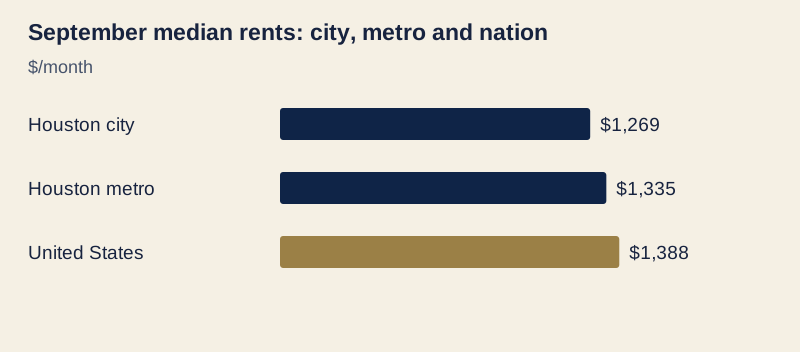
Source: Apartment List, October 2026 Houston Rent Report. Estimated medians across bedroom sizes; nested geographic areas, not separate comparable submarkets.
That flat month deserves a fair reading. It is better than another monthly decline, but it is also only one observation from a market with seasonal leasing patterns. Treating it as proof of sustained pricing power would turn a useful signal into an unsupported forecast.
A property can fill apartments while still accepting less income from each new resident. It can also protect advertised rents with incentives that reduce the cash actually received. The question for the owner is whether the next signed lease improves expected collections after the full cost of securing it.
60.3% of listings offered a concession
Realtor.com’s August rental report found concessions on 60.3% of Houston metro listings for properties with zero to two bedrooms. That exceeded its 43.5% average across the largest 50 metros. Houston’s share increased 19.4 percentage points from a year earlier, a reminder that flat headline pricing can coexist with substantial competition for residents.
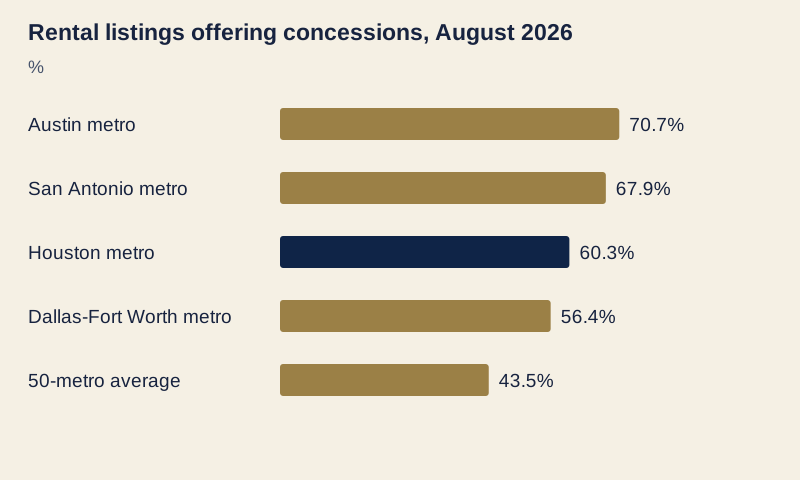
Source: Realtor.com, August 2026 Rental Report. Share of zero-to-two-bedroom listings; 50-metro average is the report average, not a national unit-weighted rate. Incentive depth is not measured.
These are listing shares, not the percentage of occupied apartments receiving free rent, and they do not measure the size of each incentive. August concessions and September rent growth are also separate observations. We cannot combine them into a precise effective-rent decline or claim that concessions increased again in September.
Still, the operating implication is straightforward. Compare competing properties on total lease economics, including free periods and waived fees, rather than the rent displayed at the top of an advertisement. A higher asking rent can produce less revenue if the incentive is sufficiently costly.

Less construction helps, with a lag
Colliers’ Q2 Houston report recorded 7,008 units of net absorption and 13,274 units under construction. The construction total was down 29.3% year over year. That is a supportive backdrop: fewer future competitors can eventually reduce the pressure to discount, provided existing vacant apartments continue finding residents.
The word eventually does real work here. A smaller pipeline is a stock of projects still being built, not a promise that every nearby lease-up has finished competing. Owners need the completion schedule of their actual competitors and evidence that those communities are retaining residents after initial incentives expire.
Northmarq’s Q2 review describes mostly flat quarterly rents despite improving vacancy, while Integra Realty Resources’ midyear outlook anticipates positive rent growth in the second half of 2027. The latter is a forecast, not an observed recovery. Neither older report overrides the new September reading; together they explain why improving supply conditions may precede stronger cash flow.
Methodology matters as much as timing. Apartment List starts with Census median rents and updates them using same-unit transactions; Realtor.com reports asking-rent listings, while brokerage reports cover their own tracked apartment markets. Their different populations and definitions cannot be averaged into a single Houston rent or vacancy figure.
What it means for owners and investors
Start the operating budget with achieved lease economics and renewal results. Net operating income, or NOI, is revenue after operating expenses; weaker rent receipts reduce the cushion available to pay debt even when occupancy looks respectable. Expense increases can magnify that pressure because flat revenue provides no automatic offset.
Retention deserves a hard look. Avoided vacancy, make-ready work and leasing incentives can make a modest renewal more valuable than a higher advertised replacement lease. That does not mean accepting every renewal proposal; it means comparing expected net collections and turnover costs on the same basis.
For an acquisition, separate the price that works on current income from the price that needs a recovery. Include remaining capital work and carrying costs in the total basis, then evaluate the return without assuming that every concession disappears promptly. Paying less per door helps only when the completed investment can support its operating and financing obligations.
Debt sizing should follow the same discipline. Coverage depends on income available for debt service, and a lower income projection can reduce refinancing proceeds even if a lender remains willing to lend. Prepare the cash plan around that potential shortfall instead of assuming a favorable headline rent report will solve it.
The Federal Reserve’s July lending survey found modest net easing in domestic banks’ multifamily lending standards during the second quarter. That national survey is useful context, but it is not a loan quote for a Houston building. Property cash flow, lender underwriting and the actual financing terms still determine whether a refinancing works.
Exit assumptions require equal care. Value reflects both income and the capitalization rate a buyer accepts; improving NOI does not guarantee a higher sale price if that required yield also rises. A defensible investment case should therefore survive a slower income recovery and an exit cap rate that does not fall.
What to watch next
Watch whether signed leases improve after incentives, whether renewals stick and whether collections follow occupied units upward. Those property measures will show whether a stable market reading reaches the bank account. The strongest evidence of recovery is stronger cash income without buying occupancy through increasingly expensive discounts.
Then compare the next monthly rent release with forthcoming quarterly operating reports and nearby delivery schedules. Continued absorption and fewer competing openings would support the recovery case; persistent incentives would argue for patience. For now, Houston’s flat September is a reason to update assumptions carefully, not a reason to spend tomorrow’s rent growth today.