$309.66 Million in Delinquent Debt Ranks Houston Third as Buyers Pick Up 1970s Apartments
Trepp puts Houston behind only New York and San Francisco for late multifamily CMBS debt, and part of Houston's share sits on bankrupt buildings that average 49 years old.
By Price Per Door Staff5 min read
Capital MarketsHouston
The number
23%
1970s-built share of Houston apartment sales, 2026 YTD
Northmarq, Houston Multifamily Q2 2026
Why it matters
Part of Houston's $309.66 million in delinquent CMBS debt sits on bankrupt buildings averaging 49 years old, while 1970s-built properties made up 23% of Houston apartment sales this year.
By the numbers
- $309.66 million: delinquent multifamily CMBS debt in Houston, third behind New York City and San Francisco in Trepp data published Oct. 16.
- 49 years: the average age of the bankrupt Houston properties behind part of that balance, all owned by one investor group.
- 8.04%: Trepp's September multifamily CMBS delinquency rate, up from 6.59% a year earlier.
- 23%: the share of Houston apartment sales year to date from 1970s-built properties, up from 16% last year, per Northmarq.
The risk
Older Texas buildings can need plumbing work costing hundreds of thousands of dollars, and a 6.0% cap rate leaves less than a point over the 5.09% 10-year Treasury.
What to watch
Trepp's October report will show whether the 8.04% multifamily rate keeps rising, and Meyerland on Braeswood's $94 million foreclosure will show how lenders handle a 2025 loan.
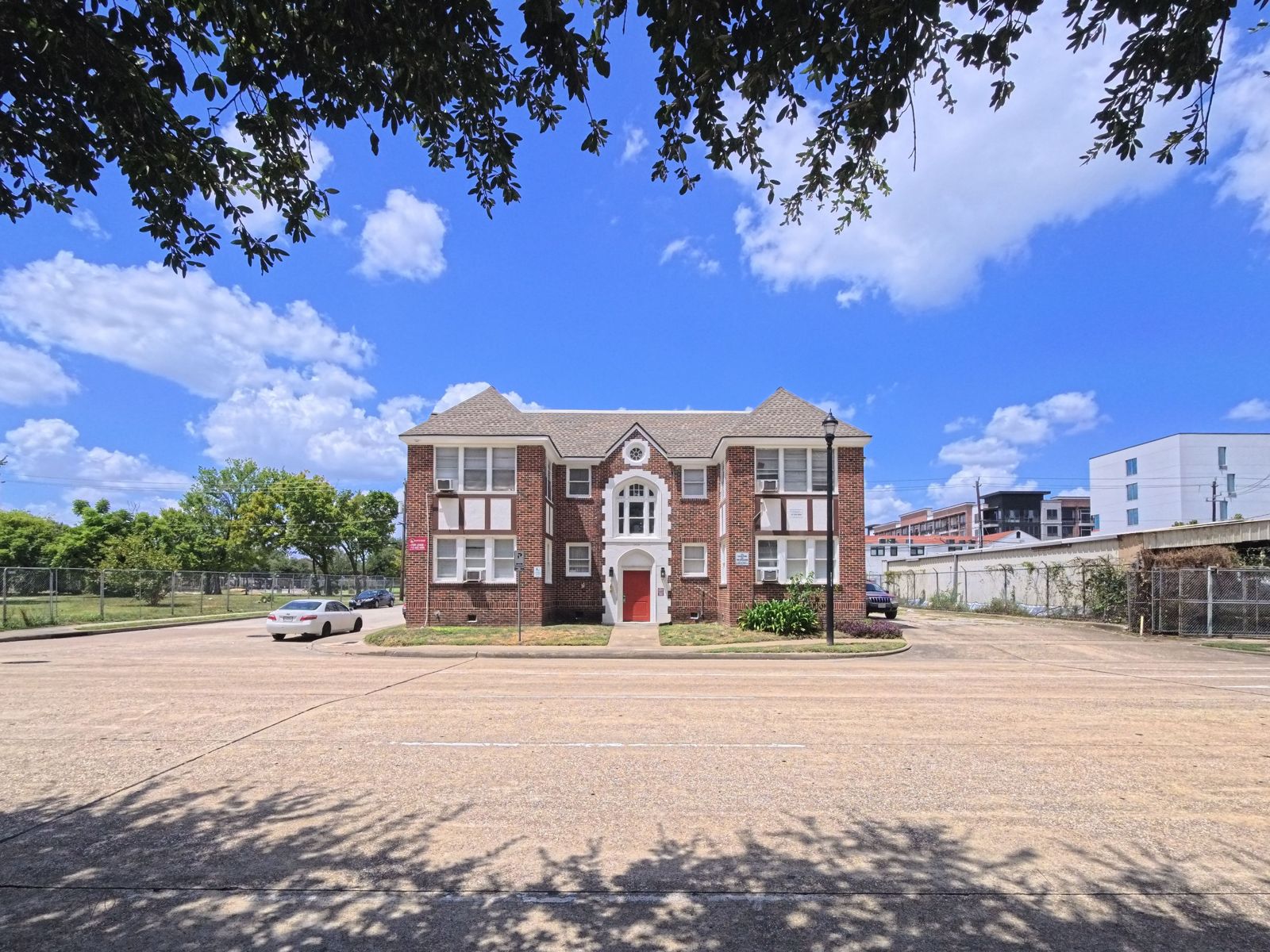
Two Houston apartment complexes built in 1973 have spent most of 2026 in trouble with their lenders. Waterford Grove has 550 units at 3125 Crestdale Drive in Northwest Houston, and the Weston Medical Center Apartments have 792 units at 7510 Brompton Road.
Waterford Grove's $62.5 million CMBS loan went to special servicing after Texas House Bill 21 ended its tax exemption, Bisnow reported in March. At the Weston, S2 Capital allegedly defaulted on an $84.3 million Citibank loan, or $106,000 per unit, according to The Real Deal.
On Oct. 16, GlobeSt published Trepp’s breakdown of delinquent multifamily CMBS debt by market. Houston ranked third with $309.66 million, behind New York City and San Francisco, which together hold more than half of the delinquent balance.
Newsletter
Houston multifamily in 5 minutes or less
What we’re seeing on the ground in Houston: operations, market moves and the deals changing hands. Every week.
The two coastal cities owe their totals mostly to a handful of giant loans, including the $955 million securitized piece of the Parkmerced loan in San Francisco. Houston's balance is spread across multiple properties.
Part of it comes from one investor group that put its properties into bankruptcy to avoid foreclosure. Trepp says those buildings average 49 years old, close in age to Waterford Grove and the Weston.
The late loans are in CMBS and bridge debt
Trepp's multifamily CMBS delinquency rate reached 8.04% in September, up from 6.59% a year earlier, Scotsman Guide reported. The overall CMBS rate, 8.02%, was the highest since late 2020.
Agency and bank loans look nothing like that. The Mortgage Bankers Association put Freddie Mac's 60-day delinquency rate at 0.51% and Fannie Mae's at 0.6% in the second quarter, and a CRED iQ analysis of FDIC data had bank-held multifamily loans at 1.41%.
Fitch's September report shows a split inside CMBS as well. Its overall multifamily rate was 1.37%, but conduit multifamily loans rose to 5.40% from 5.24%.
Floating-rate bridge debt is in worse shape. CRED iQ said CRE CLO distress jumped from 19% in July to 28% in August, and Texas, Florida and Georgia carry 44% of that distressed balance.
Class C occupancy and the Waterford Grove math
On average, older Houston buildings are fuller than new ones. Transwestern's second-quarter factsheet puts Class C occupancy at 92.8% against 85.6% for Class A, and MRI ApartmentData's October report has 51% of Class C units offering concessions, compared with 73% of Class A units.
Trepp does say heavy construction has squeezed older properties' occupancy, rents and net operating income. The sharper problem in the named cases is the debt.
Waterford Grove's loan was underwritten at a $93.5 million value. Bisnow cited a $48 million appraisal from last year, while Multifamily Dive, citing Morningstar, reported a July reappraisal of $63.2 million.
Either appraisal puts the $62.5 million loan at roughly the property's full value or above it.
Rescue capital is expensive when it shows up. GlobeSt described one preferred equity deal on Oct. 15 with a double-digit return paid monthly, a two-year term, a minimum multiple on early repayment and personal guarantees from the principals.
S2 took a different route, modifying or refinancing $1.2 billion of loans on 26 Sun Belt properties at an average loan-to-value ratio of 95%, The Real Deal reported on Oct. 14. The plan assumes SOFR stays at or below 4.1% for five years; the New York Fed published SOFR at 3.89% for Oct. 15.
What it means for owners and investors
Buyers are already working through this vintage. Properties built in the 1970s made up 23% of Houston apartment sales year to date, up from 16% last year, according to Northmarq’s Q2 2026 Houston report.
The same report puts the median sale at $107,900 per unit, down 27% from the 2025 median, with cap rates averaging 6.0%. That puts a 1973 building like Waterford Grove at the cheap end of the market, priced well below the $93.5 million its lender underwrote.
Older buildings carry their own costs. Multifamily Dive's July report noted that 1970s and 1980s buildings can need plumbing repairs costing hundreds of thousands of dollars, and CONTI Capital's Carlos Vaz said property taxes run 30% to 40% of operating expenses in Texas.
Patrick Carroll of Carroll Holdings put it more bluntly to the same publication, repeating something he'd been told: "Houston is a place where equity goes to die." He was talking about deals that look cheap per unit and then run into delinquency.
Financing is the other constraint. A 6.0% average cap rate sits less than a point above the 5.09% 10-year Treasury close on Oct. 16, so the return on an older building has to come from operations and a lower basis.
Supply works in a buyer's favor. Trepp expects this year's deliveries to add just 1.1% to Houston's inventory, and Northmarq's preliminary forecast calls for roughly 5,600 completions in 2027, the lowest annual total in nearly 15 years.
Demand is harder to size. The Greater Houston Partnership counts 50,300 jobs added in the 12 months to July, while the Dallas Fed puts the gain over the same span at 17,500.
What to watch next
The largest new Houston loan on The Real Deal's October foreclosure list was on Meyerland on Braeswood. Olive Tree Holdings faced a $94 million foreclosure on the 1,326-unit complex at 5410 Braeswood Boulevard, on a loan Future Standard and Rialto Capital Management made in 2025, The Real Deal reported.
That loan is about a year old, so it does not fit the usual account of 2021 and 2022 debt coming due. Statewide, loans flagged for foreclosure in October topped $1 billion, up from under $800 million in September, according to Roddy's Foreclosure Listing Service.
Fitch's 30-day bucket grew to $1.51 billion in September from $1.26 billion in August. Those loans have not reached the 60-day threshold in its headline index yet, and Trepp's October report will show whether the 8.04% multifamily rate keeps rising.
One question we could not answer: Trepp did not name the investor group behind the bankrupt 49-year-old buildings. Falls Management Group has four Houston properties in Chapter 11 within a 3,633-unit portfolio now operated by Lynd Management Group, but nothing we found ties those properties to Trepp's figure.
Sources
- Multifamily Dive: Problem loans, tracking the biggest multifamily delinquencies
- GlobeSt: Sponsors face tough terms as they turn to rescue capital
- KBRA: CMBS loan performance trends, September 2026
- Multifamily Dive: Texas apartment owners face uphill battles
- MBA: 17 percent of commercial and multifamily mortgage balances to mature in 2026
Written by Price Per Door from public reports, filings and data. See all sources.